Peridot: The Evening Emerald
Born deep within the earth and carried to the surface by fire, peridot glows with a green so fresh it seems lit from within. By candlelight, it was once mistaken for emerald.
BY THE DIMIRA JOURNAL · · 4 MIN READ
Most gemstones form in the earth's crust. Peridot comes from much deeper, from the hot, molten layer beneath it. It travels upwards in volcanic rock, sometimes from tens of kilometres below, and arrives at the surface already shining.
A few peridots have travelled even further. Crystals of the same mineral have been found inside meteorites, making peridot one of the very few gems known to have fallen from the sky.
One gem, one colour
Many gemstones come in a whole palette of shades. Peridot comes in only one: green. Its colour comes from iron within the crystal itself, so every peridot carries some version of the same fresh hue, from soft olive to bright lime and golden spring green.
The finest stones show a pure, lively green with only a hint of gold. Hold one up to a window and it seems to collect the light and give it back, warmer.
The gem of the sun
The ancient Egyptians mined peridot on a small island in the Red Sea and called it the gem of the sun. Legend says the island's mines were worked at night, when the stones were easier to spot in the dark.
For centuries, peridot was confused with emerald. Some of the great "emeralds" of medieval Europe, set into treasures and church relics, have since been revealed as peridot. Under candlelight, the two are hard to tell apart, which is how peridot earned its old name: the evening emerald.
The August stone
Peridot is the birthstone for August, and the traditional gift for a 16th wedding anniversary. It has long been linked with light, renewal and warmth, a bright stone for a bright month.
How to wear it
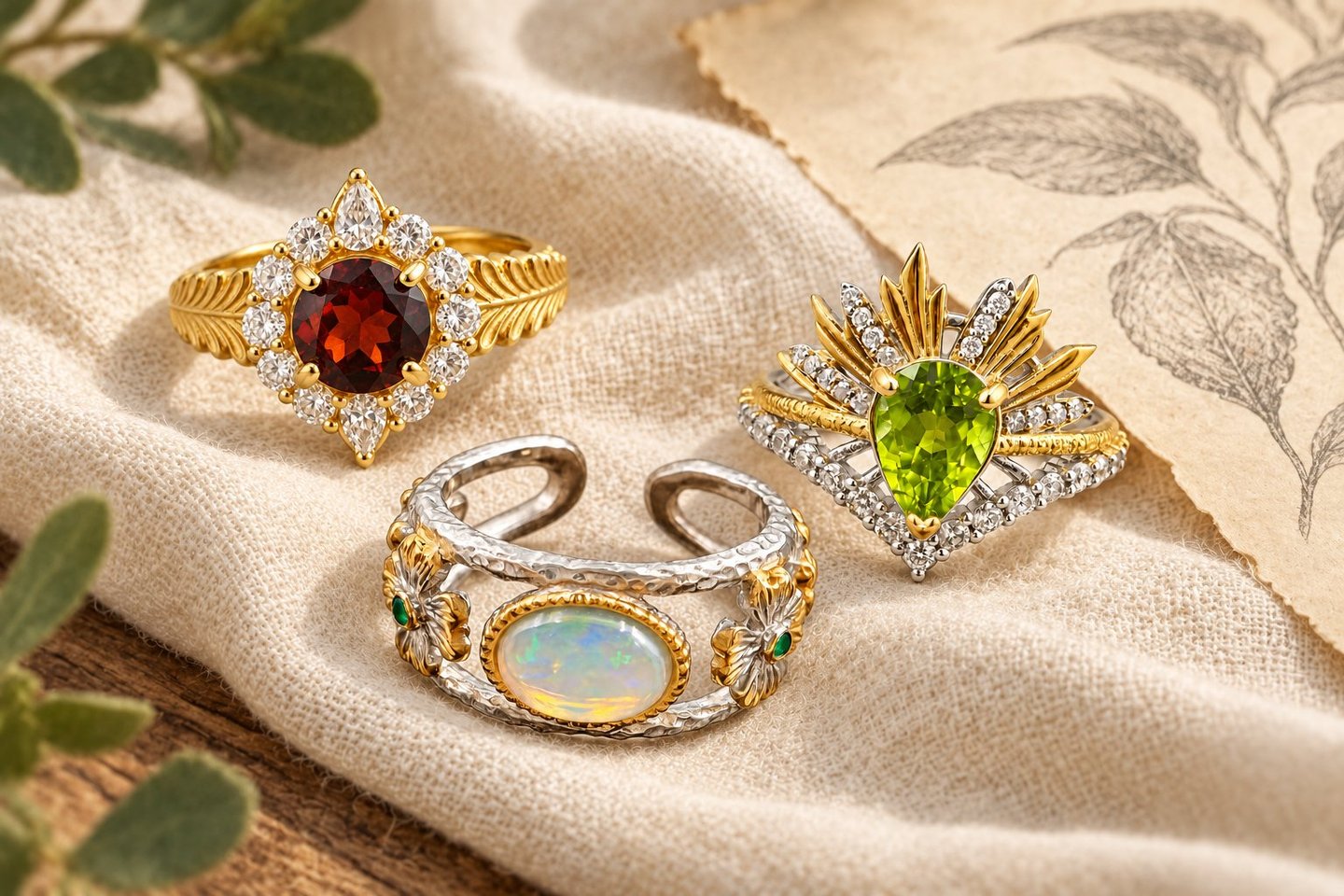
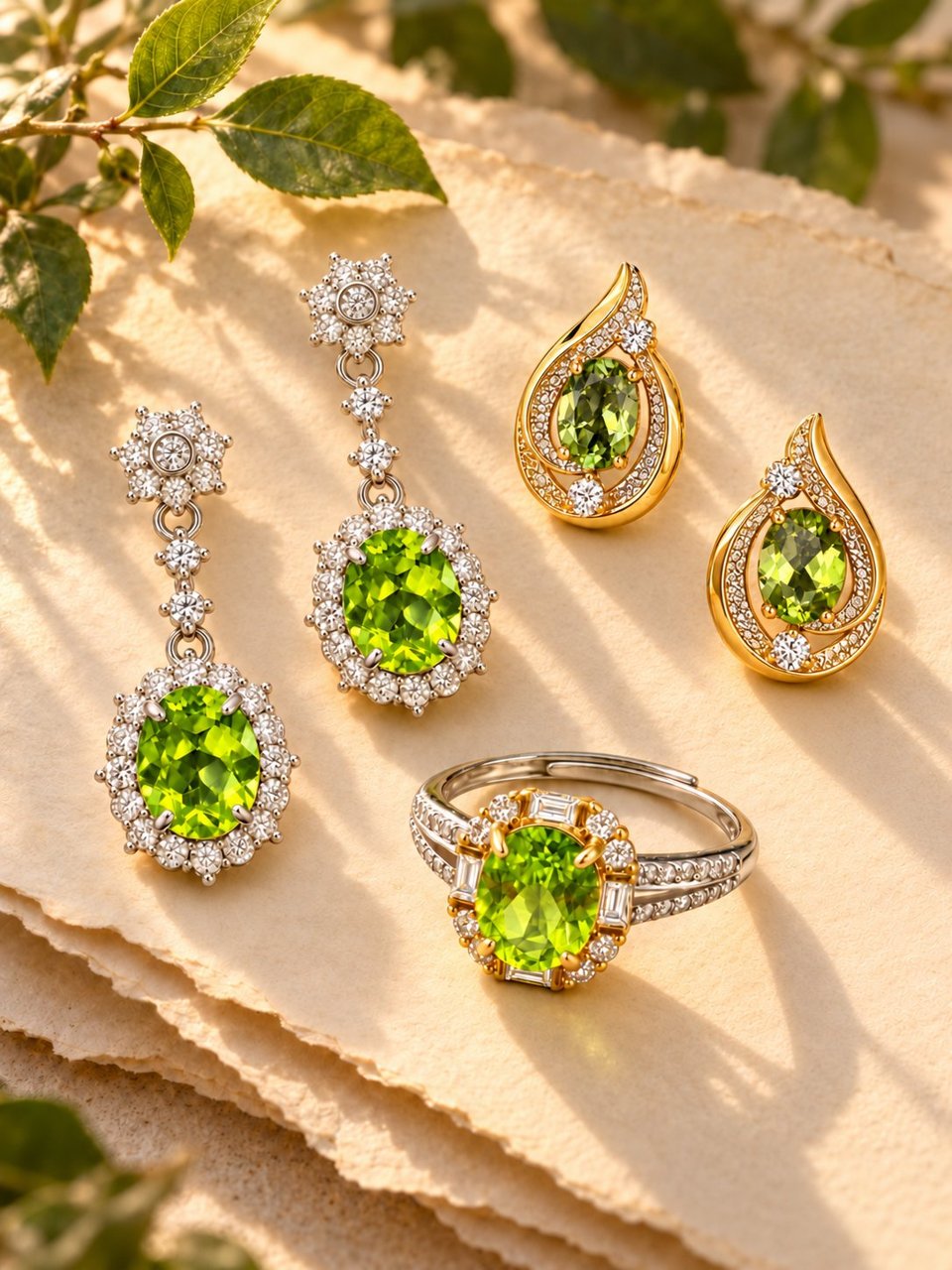
Peridot is a natural companion to gold. The warm metal deepens its green and gives it a sunlit glow. It also looks striking beside other colours: garnet red for a rich, jewel-box contrast, or soft amethyst purple for a garden feel.
Wear peridot studs every day; save a halo ring or a tennis bracelet for summer evenings, when the light is low and the stone comes alive.
Caring for peridot
With a hardness of 6.5 to 7, peridot is ready for regular wear with a little attention.
- Avoid sudden changes in temperature and keep it away from harsh household chemicals.
- Clean it with warm water, mild soap and a soft brush, then rinse and dry.
- Store it apart from harder gems such as sapphire, which could scratch it.
A little sunlight, worn close.